


How to Choose Window Graphics for Your Business

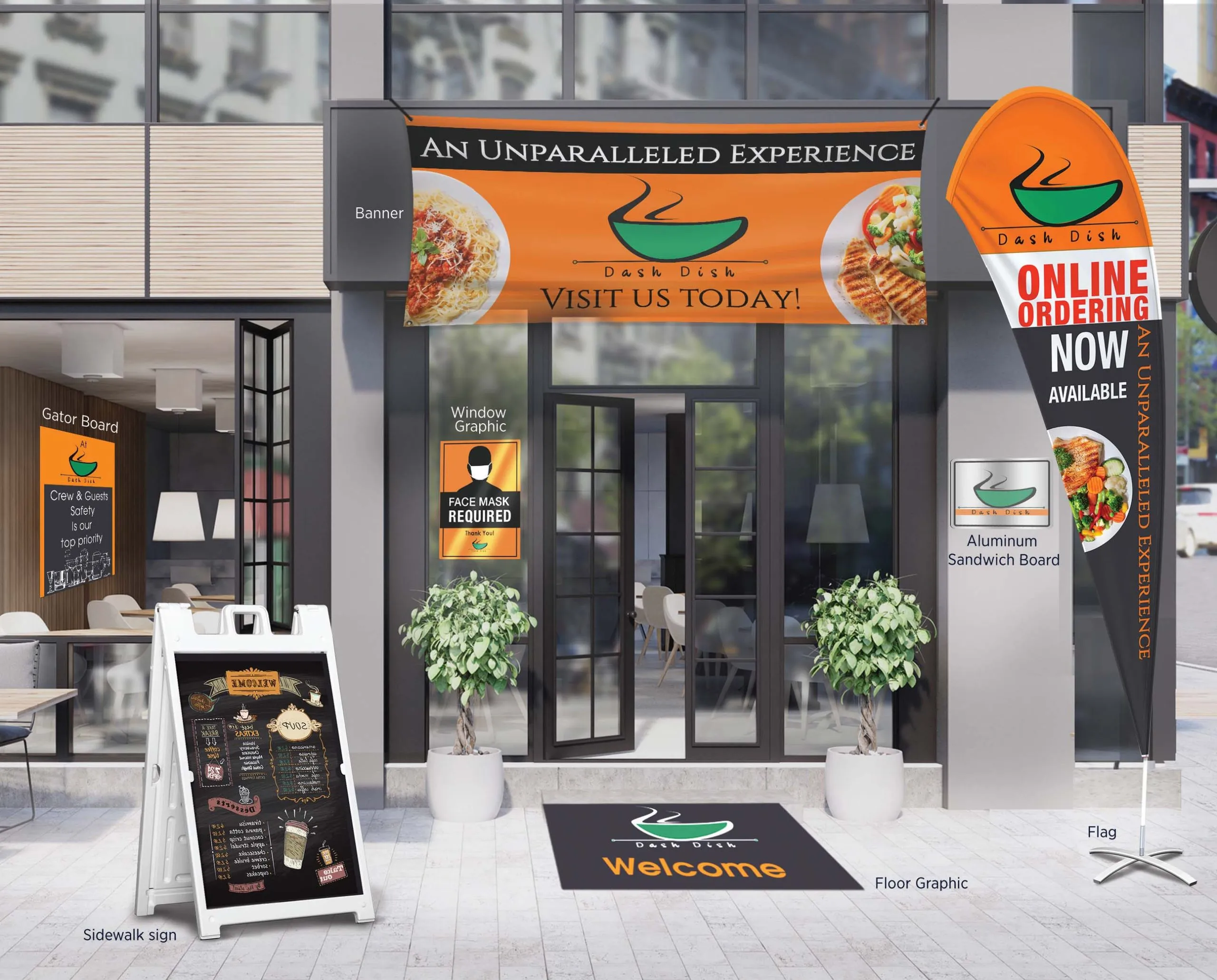
Window graphics can introduce your business, explain an offer or shape how a space looks. Choosing a product starts with the purpose of the graphic and the glass where it will be installed. The artwork, visibility requirements and installation details should be planned together.
Decide what the graphic needs to do
Choose the main job before filling the window with information. A storefront promotion, a logo on a door and a privacy pattern for an interior office have different priorities. Identify who needs to read the graphic, from which side and at what distance.
For a promotional display, start with one main message and a clear next step. For a branded space, consider the relationship between the graphic, surrounding signs and existing interior design.
Compare the product options
- Adhesive window vinyl: a starting category for printed glass graphics. Discuss the required coverage, application side and removal plans before choosing the specific material.
- Clear adhesive vinyl: consider this when the design includes transparent areas. Ask how artwork colors and any white ink requirements will be handled.
- Perforated window vinyl: compare this option when you want a printed graphic while retaining a degree of visibility through the material. Review the actual film specification and a sample for the intended setting.
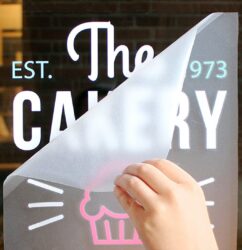
- Frosted vinyl: a starting point for decorative glass patterns or privacy-oriented designs. Confirm the appearance and level of coverage with a sample.
- Static window cling: review this option when planning a changeable glass display. Ask about surface suitability, application and expected use before ordering.
These categories are starting points, not interchangeable specifications. For general material background, 3M explains perforated window graphic film and decorative privacy films. Confirm the particular material quoted for your project.
Measure each glass panel
Record the width and height of each panel and label it in a photograph or sketch. Note handles, frames, seals, decals and other obstacles. Do not assume that adjacent panes have identical measurements. Include photographs from both the main viewing position and close to the glass.
Plan the artwork around the viewing conditions
Keep important words away from panel divisions and door hardware. Check the design against the background people will see through or around it. Ask how the artwork should be prepared for the intended viewing side, especially for inside-applied graphics intended to be read from outside.
Use the final panel layout when reviewing a proof. A design that works on one flat screen may need adjustments when divided across several windows.
Discuss installation before production
Provide the glass location, access details and information about existing film or graphics. Explain how long the display is intended to remain and whether removal of an old graphic is part of the project. Confirm surface compatibility, installation arrangements and final measurements before the production file is approved.
What to include in a quote request
- The purpose of the graphic and the desired product or visual effect.
- Panel measurements, quantities and photographs.
- Your logo, artwork and intended viewing side.
- Any visibility, privacy, installation or removal requirements.
- Your project deadline.
Send your window graphic requirements to request a custom quote.


